Know that every customer is real, in seconds

Document OCR, face match and passive liveness on one platform. One API launches a hosted capture session and hands you back a signed verdict — no capture UI to build.
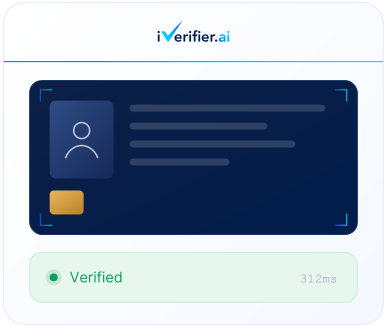
iVerifier-Header-ScanCard
iVerifier.ai Verified 312ms

Seconds

From capture to signed verdict

3 steps

Authenticate, initialize, open the hosted flow

1 platform

Document, face and liveness together

How it works

One API, a full verification pipeline

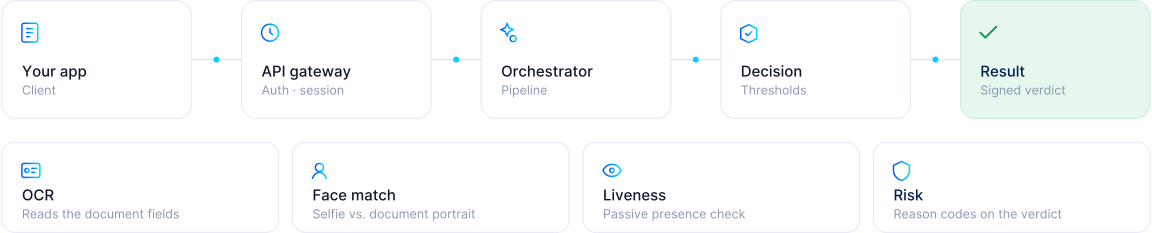
Every session moves through the same signed pipeline, from your app to a verdict you can trust — so nothing about the decision is a black box.
Document, face and liveness scores all feed the same decision engine, so a verified customer is a single, explainable outcome rather than three separate systems to reconcile.

Hosted capture

iVerifier owns the camera, the prompts and the capture UX

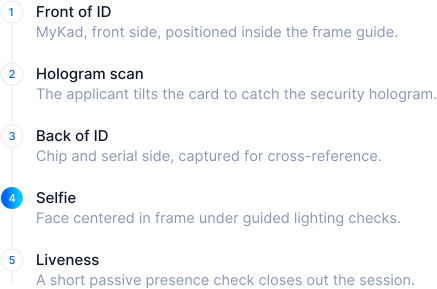
Hand the applicant a single URL and guide them through five controlled steps. You never build a capture interface.
iVerifier-HostedCapture
iVerifier-Capture-Steps

Integration

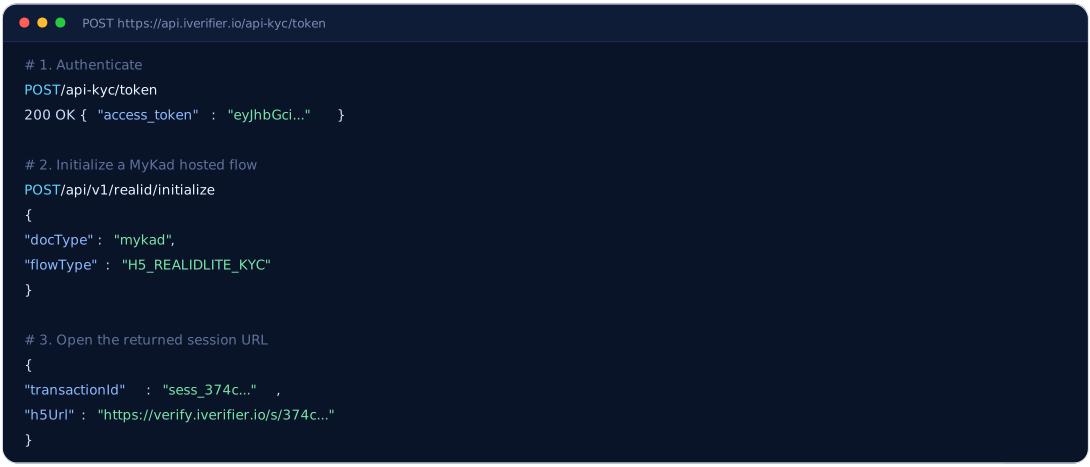
Three calls to launch a session

Authenticate, initialize a flow for the document type you need, and hand the applicant the returned URL. That’s the whole integration surface.
iVerifier-Integration
iVerifier-Code-Console

Minimal UI work

Hosted capture handles the camera and every on-screen prompt.

Session scoped

Every capture is traceable end to end by its transaction ID.

Developer ready

Signed webhook delivery, with polling as a fallback.

Result delivery · for developers

Pushed to you, and always pollable

The moment a decision is made, it’s delivered to your systems and to the applicant at the same time — never a black box, never a gap between the two.

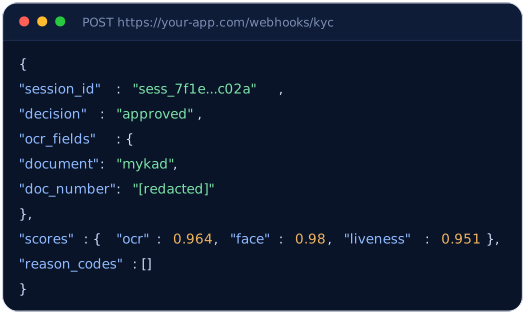
Signed webhook payload

HMAC-SHA256 signed, so you can verify authenticity before you act on it.

Polling as a fallback

Query the session by transaction ID any time the webhook doesn't land.

Instant applicant feedback

A clear result reaches the user's screen the moment the decision is made.

iVerifier-Webhook-Console

Biometric check & tenant portal

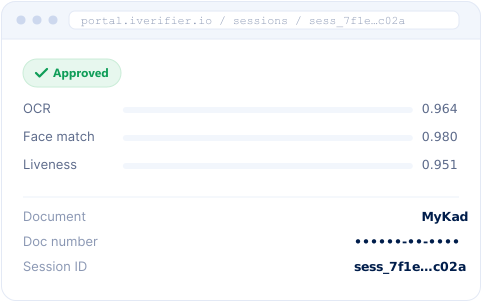
Every verification captured, scored and reviewable

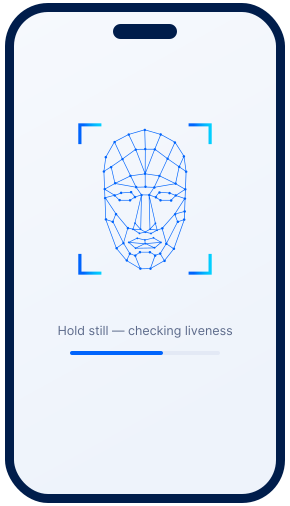
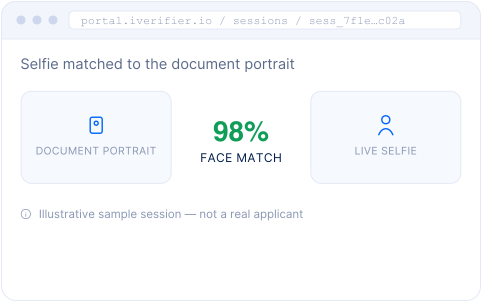
Face comparison and passive liveness contribute to the final risk decision, and the full session — media, scores and identity fields — stays reviewable afterward.
iVerifier-Portal-FaceMatch
iVerifier-Portal-Verdict

Who it's for

Built for onboarding wherever it happens across a regulated enterprise

The same hosted verification flow adapts to the identity documents, risk profile and onboarding channel each sector needs — banking, insurance, telecom and government included.
Banks & financial institutions

Banks & financial institutions

Digital account opening and remote CDD for current, savings and investment products, including higher-risk cases without an existing bank relationship.
insurance

Insurance & takaful

Verify policyholders, payors and beneficiaries at onboarding and again at claims time, with agent-assisted flows for higher-touch products.

Telecommunications

Subscriber identity verification for prepaid and postpaid registration, and step-up re-verification against SIM-swap and account-takeover fraud.
public sector & government

Public sector & government

Identity assurance for citizen-facing digital services, benefit disbursement and counter-assisted enrolment, alongside existing national ID infrastructure.
MSBs, 2-money & fintech

MSBs, e-money & fintechs

Remittance, money-changing and e-money issuers with the identification and verification controls their license conditions require.
other regulated enterprises

Other regulated enterprises

Any organization that needs to know a person is who they claim to be before granting access, credit or a service — the same hosted flow, reconfigured.

Regulatory alignment

Built around what regulators expect from e-KYC

iVerifier’s document, face-match and liveness pipeline is structured around the same identification-and-verification building blocks that regulators across the region ask financial institutions to have in place — including Bank Negara Malaysia’s e-KYC policy and MAS’s AML/CDD framework in Singapore.
MY

Bank Negara Malaysia

e-KYC Policy Document, effective 15 April 2024

Three-module e-KYC baseline

BNM expects document verification, biometric face matching and liveness detection as the core of an e-KYC solution.

False Acceptance Rate monitoring

Institutions must track FAR on a tiered scale, with board review above 3% and notification to BNM above 5%.

Independent module assessment

Each module must undergo external assessment and breakthrough testing, referencing standards such as ISO 30107-3 and ISO 19794-5.

Board governance & reporting

The Board must approve the e-KYC risk framework, with half-yearly performance records submitted to BNM.

SG

Monetary Authority of Singapore

AML/CFT Notices & CDD requirements

Customer Due Diligence

MAS Notices such as 626, 824 and the PSN payment-services notices require identification, verification and ongoing monitoring of customers.

Enhanced Due Diligence triggers

Non-face-to-face and higher-risk customers call for Enhanced Due Diligence under MAS's CDD expectations.

Recordkeeping, five years plus

Customer and transaction records, including CDD evidence, must be retained for at least five years.

AI-assisted verification, encouraged

MAS's National AML Strategy explicitly encourages AI-driven liveness and deepfake detection as part of modern onboarding.

These obligations sit with the licensed institution, not the technology vendor. iVerifier provides the verification pipeline and the session evidence behind it — your compliance, risk and audit teams remain responsible for board approval, independent assessment, FAR governance and regulatory submission under BNM and MAS requirements.

Trusted identity at the speed of business

Document, face and liveness on one platform. Verify real customers in seconds, and see every decision, still explainable, after the fact.
Contact form image of Crest website

Let's Connect!

Request for information or schedule a solution demo.

This site is protected by reCAPTCHA and the Google Privacy Policy and Terms of Service apply.